
The central government has revamped the Khelo India Scheme's funding pattern, allocating a Rs 565 crore component for states to co-share the cost of future sports infrastructure development projects over a five-year plan. This new model, part of a Rs 29,054 crore outlay, aims to increase state ownership and participation in sports development, significantly expanding the scheme's reach and athlete base.
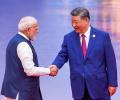
India's dual pursuit of a robust strategic partnership with Washington and a pragmatic, tension-management policy with Beijing represents the essence of modern multi-alignment. By embracing economic pragmatism, learning to compartmentalize political differences, and engaging in continuous dialogue, India can secure its borders, grow its economy, and contribute to a stable, multipolar Asian century, points out Ambassador Rajasekhar.

'The market is currently neither cheap enough to be exciting about nor expensive enough to worry about.'

Haryana Chief Minister Nayab Singh Saini met with a World Bank delegation to discuss advancing Artificial Intelligence, digital governance, and skill development in the state. The discussions focused on leveraging technology to enhance citizen services, with plans to showcase Haryana's AI Sandbox globally and develop a dedicated AI model for the state.

VinFast has gone from an unknown brand to India's fifth-largest EV carmaker in just seven months, but its toughest battle is only beginning.
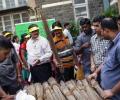
Commonwealth Games gold medallist Soman Rana has highlighted the critical need for increased corporate support and permanent jobs for Indian para-athletes. He stressed that financial security is vital for athletes to focus on training and achieve consistent international success, including at events like the Paralympics and Para Asian Games. His views were echoed by PCI president Devendra Jhajharia and M3M Foundation chairperson Payal Kanodia, who noted the growing recognition and support for the Paralympic movement in India.

Former India captain Ajinkya Rahane has joined Amsterdam Flames as a marquee player in the inaugural European T20 Premier League, aiming to make a global impact and share his experience with other players.
A new study projects that by 2100, only 38% of the world's population will reside in large cities, a significant reduction from previous estimates. This revised projection is based on a newly discovered urban life cycle, where the growth rate of large cities slows down as countries become more urbanised, contrasting with the rapid growth seen in less urbanised regions. The research highlights the importance of understanding these dynamics for future infrastructure and climate adaptation planning.

Former Indian cricketer Ajinkya Rahane has expressed profound satisfaction with his decision to retire from international cricket, stating he has 'no regrets at all' after giving his '200 per cent' on the field. Rahane also revealed his openness to venturing into coaching or mentorship roles in the future, aiming to share his extensive experience globally.

India is set to host the Asian Senior Fencing Championships for the first time from June 19-24 in New Delhi, featuring athletes from 34 countries, including Olympic medallists. The event is a direct qualifier for the Asian Games and offers ranking points for the 2028 Los Angeles Olympics, with Indian Olympian Bhavani Devi leading the home challenge.

World Cup 2026 is on track to become the biggest betting event in history, with global wagers expected to exceed $50 billion as sportsbooks report record-breaking activity driven by the expanded tournament format and growing legal gambling markets.

'Healthy double-digit returns are still possible, though a sharp rally is unlikely.'

FIFA President Gianni Infantino is facing a deepening crisis after his proposal to sell a stake in the World Cup was abandoned, leading to public distancing from influential executives and calls for his removal from office.

Ahmedabad, India, has been confirmed as the host for the 2030 Commonwealth Games, a significant step in India's ambition to become a global sporting capital and potentially host the 2036 Olympic and Paralympic Games.

Indian archer Sahil Jadhav, preparing for the Asian Games, has found valuable insights into managing pressure and staying focused from former Australian cricketer Shane Watson's self-help book, 'The Winner's Mindset'.

After four consecutive months of withdrawals, Foreign Portfolio Investors (FPIs) injected Rs 20,200 crore into Indian equities in July, driven by attractive valuations, improving corporate earnings, and a more favourable global environment.

'It's not about individuals operating the mule accounts being more or less skilled. Instead, 'lower-level' refers to the role the individual account plays in the broader mule network.'

FIFA President Gianni Infantino's re-election bid is facing significant challenges as several national football federations, including Serbia, Sweden, and Wales, have withdrawn their support.

Indian benchmark indices Sensex and Nifty experienced a significant slump, with the Sensex tumbling 719.08 points, driven by escalating West Asian tensions, a sharp rise in crude oil prices, and a global sell-off in technology stocks.

UEFA's member associations have unanimously voted to boycott the World Cup and other FIFA competitions in protest against FIFA's plan to sell stakes to external investors in a subsidiary managing its tournaments.

The All India Tennis Association (AITA) has launched a new digital platform in partnership with World Tennis Number, creating a unified ecosystem for Indian tennis. This platform will streamline registrations, tournament entries, and provide access to rankings, aiming to modernise the sport's administration and player experience.

Christopher Wood, global head of equity strategy at Jefferies, warns that cheaper Chinese artificial intelligence (AI) models could lead to 'massive capital destruction' in US markets, highlighting the rapid growth of Chinese LLMs and the increasing debt funding for AI capex in the US.
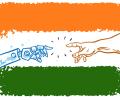
Generative artificial intelligence (AI) is beginning to alter hiring patterns in South Asia, with multinational companies (MNCs) and firms integrated into global value chains (GVCs) reducing recruitment more sharply than domestic firms, signalling the technology's early impact on the region's export-oriented services sector, according to the World Bank's World Development Report 2026.
The Indian Racketlon team, captained by Vikramaditya Chaufla, is set to defend its title at the Racketlon World Championships in Rotterdam, the Netherlands. The six-member squad, including last year's champions, will compete in the Challenge Cup, aiming to showcase India's growing prowess in the unique multi-racket sport.
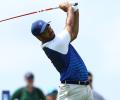
Indian golfers Shubhankar Sharma and Anirban Lahiri are set to lead the home challenge at the DP World India Championship, scheduled for October 15-18 at the Delhi Golf Club. The tournament will feature a star-studded international field including Major winner Rory McIlroy, Tommy Fleetwood, Ryan Fox, Shane Lowry, Justin Rose, Luke Donald, and Viktor Hovland. Both Sharma and Lahiri expressed excitement about competing on home soil, highlighting the event's significance for Indian golf.
Microsoft has launched its fourth cloud region in India, located in Hyderabad, significantly expanding its hyperscale cloud presence. This move is part of a USD 20.5-billion investment in India's digital and AI infrastructure, aiming to support the country's rapid digital growth and meet increasing demand from major enterprises.

For the first time since 1998, no Indian umpire or technical official will be present at the FIH Men's Hockey World Cup, a situation that has left former international officials disappointed and calling for a structured pathway to develop and support Indian officiating talent.

Two-time Olympic medallist Neeraj Chopra is set to compete in the Lausanne Diamond League on August 21.

Russian President Vladimir Putin and Chinese President Xi Jinping have reaffirmed their commitment to dismantling global hegemonism and building a 'multipolar world' during high-level talks in Beijing.

Jordan Football Association President Ali bin Hussein has publicly accused FIFA President Gianni Infantino of 'blackmail', alleging that FIFA offered to resolve the kingdom's football problems in exchange for his endorsement, a claim FIFA has been contacted about for comment.
The AM Green Indian Golf Premier League (IGPL) and the Asian Tour have reaffirmed their partnership, aiming to expand playing opportunities and player development for Indian golfers on the international circuit, following successful tournaments in Morocco.

The Nifty's stunning 200-point jump in the final minute of trading wasn't a glitch. It marked India's shift to a new, globally accepted system of end-of-day price discovery.

Smriti Mandhana is the only Indian named in TIME's 100 Most Influential People in Sports 2026 list, joining global icons such as Lionel Messi, Cristiano Ronaldo and LeBron James after another record-breaking year in cricket.
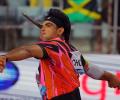
Two-time Olympic medallist Neeraj Chopra is set to compete in the Lausanne Diamond League on August 21. He will face a formidable field of javelin throwers, including Commonwealth Games champion Rumesh Pathirage, Olympic champion Arshad Nadeem, and world champions. This marks Chopra's third competition since returning from injury, following his silver medal win at the recent Commonwealth Games.

Tech giant Apple reported a record June quarter revenue of USD 109.4 billion, a 16 per cent year-on-year increase, with significant double-digit growth in emerging markets like India. However, the company anticipates business risks in the coming quarters due to rising memory chip prices and ongoing supply constraints.

India's manufacturing sector activity growth declined to a five-year low in July, with the HSBC India Manufacturing Purchasing Managers' Index (PMI) falling to 53.5 from 54.2 in June, driven by a slower rise in new business orders and challenging market conditions.

'1991 was an exceptional period in Indian history.' 'A big 400-volt shock was administered to the system, which was required. Today, we are in a much, much better position.'

Air India, SkyDrive, and Suzuki Motor Corporation have signed an initial pact to conduct a joint feasibility study on using electric vertical take-off and landing (eVTOL) aircraft for medical air logistics in India. This collaboration aims to address severe traffic congestion in major Indian cities, which poses challenges for time-critical medical transport, by developing last-mile emergency medical solutions.

Former Italy international Andrea Pirlo has withdrawn from contention for the national team's head coach position after his commercial ties to Russian betting company Fonbet drew significant criticism and opposition from Italian football officials and lawmakers.

Ayush Shetty, Unnati Hooda, Simran Singhi, and Kavipriya Selvam are set to make their BWF World Championships debut as India hosts the prestigious badminton event after 17 years, offering a significant platform for these rising stars.
